
The core difference
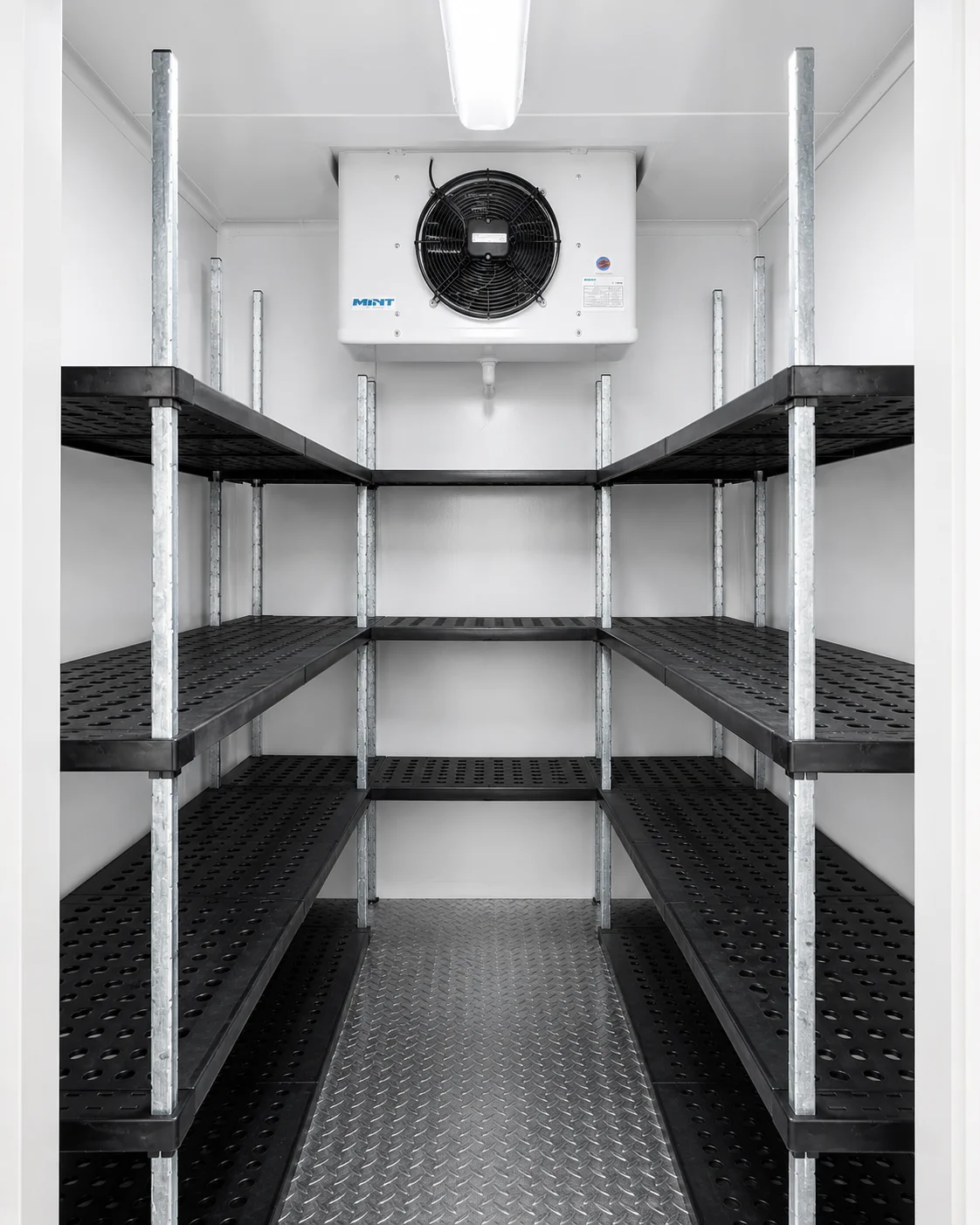
A cold room (also called a cool room or chiller) holds product above freezing, typically between 2 and 8 degrees Celsius. It is built to keep fresh food fresh: produce, dairy, drinks, meat for short-term storage, and prepped meals.
A freezer room runs well below zero, usually around minus 18 degrees Celsius, to keep product frozen solid for long-term storage. The insulation, door seals, and refrigeration system are all heavier-duty to hold that lower temperature reliably.
When a cold room is the right call
Choose a cold room when your stock turns over quickly and needs to stay chilled rather than frozen. Restaurants, cafes, greengrocers, florists, and bars almost always lead with a cold room because most of what they handle is fresh and short-lived.
Cold rooms are also the workhorse for daily prep. Keeping ingredients at a steady chilled temperature protects quality and food safety without the texture changes that freezing can cause.
When you genuinely need a freezer room
A freezer room earns its place when you buy in bulk, store proteins long-term, or run a menu built around frozen goods. Butchers, food manufacturers, ice cream and dessert businesses, and large caterers all rely on dependable sub-zero storage.
Freezing extends shelf life dramatically and lets you take advantage of bulk pricing. The trade-off is higher power draw and the need to manage stock rotation so nothing sits frozen indefinitely.
The dual-temp option
If you need both chilled and frozen storage but do not have the space or budget for two separate rooms, a dual-temp room splits a single unit into a chiller section and a freezer section.
This is a popular choice for growing venues that want flexibility. You get the best of both worlds in one footprint, and with hire you can adjust the arrangement as your needs change.
Running costs and power
Freezer rooms cost more to run than cold rooms because holding minus 18 degrees takes more energy than holding 4 degrees. Factor this into your decision, especially if the unit will run continuously for months.
Site power matters too. Make sure you have suitable, stable power at the install location. Our team checks power requirements before delivery so there are no surprises on the day.
Our recommendation
If most of your stock is fresh and fast-moving, start with a cold room. If you store in bulk or rely on frozen product, you need a freezer room. If you are torn, a dual-temp unit or a short hire term lets you find out what works without committing to the wrong thing.